
Why Do Law Firms Lose Clients Before the First Call? Fixing Intake with Conditional-Logic Forms
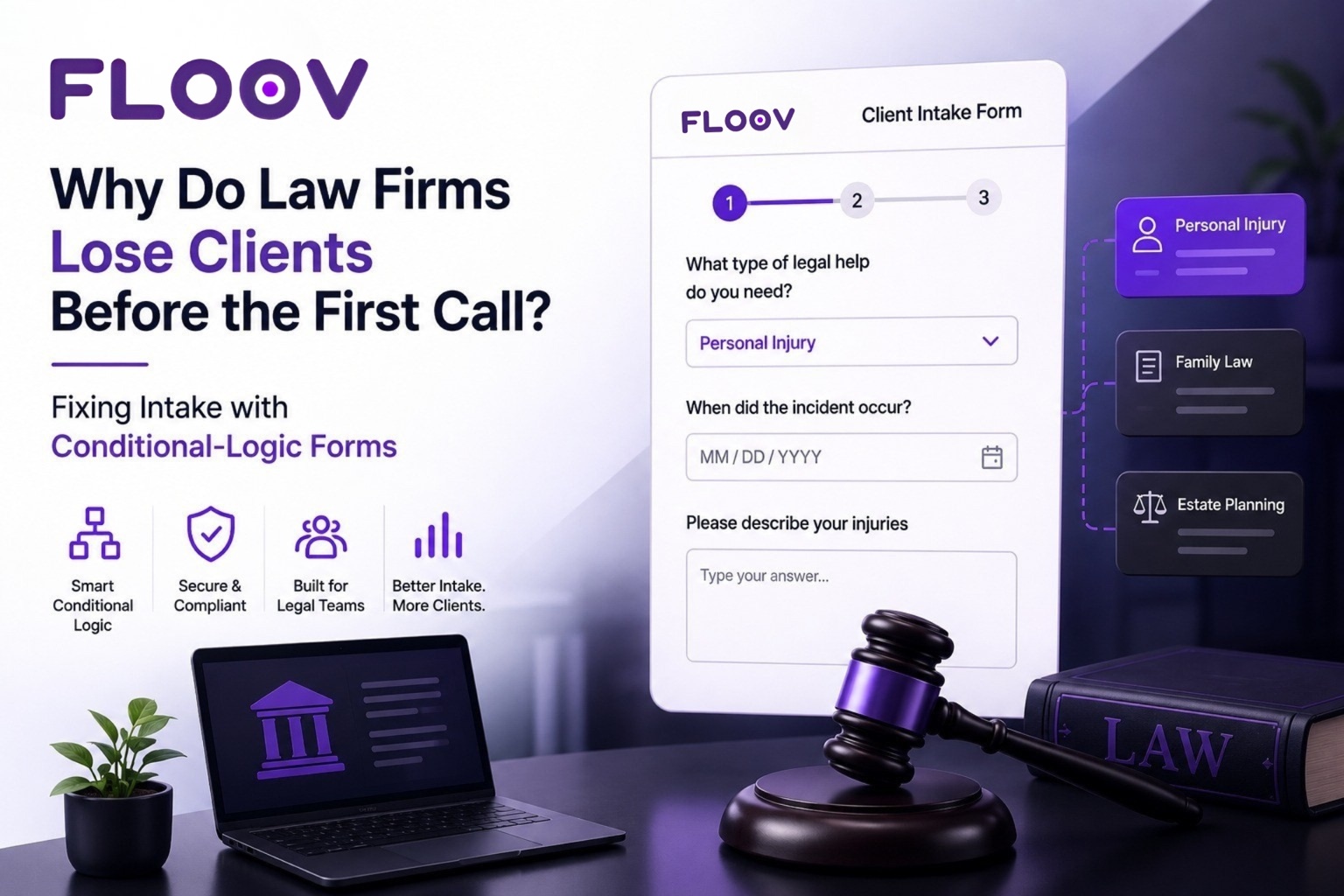
A potential client finds your website, feels good about your practice, and opens your contact page. Then they hit a wall: seven text boxes, no guidance, and questions that don't apply to their situation. And they close the tab. Then the single moment, before the phone ever rings, is where most law firms quietly lose business.
The fix isn't more marketing spend. It's a better legal client intake form with Floov.
The Real Cost of a Bad First Impression
Think about how much a firm spends getting a visitor to that page, the ads, the content, the referrals that finally paid off. All of that gets wiped out the second a client information form feels generic or confusing. A form that asks a divorcing parent about "business assets" or asks a small business owner about "custody arrangements" isn't just annoying; it signals that the firm hasn't thought much about who's actually filling it out.
Here's the thing people forget: the sale doesn't happen when someone clicks your website. It happens when they finish the form. A law firm client intake form that actually feels like it was built for the person filling it out is what turns a curious visitor into a real case on someone's desk.
What Conditional-Logic Forms Actually Do
Conditional-logic forms change based on how a person answers each question. A visitor selecting "Personal Injury" sees follow-up fields about the accident date and injuries.
Someone selecting "Estate Planning" instead sees questions about assets and beneficiaries. Nobody wades through irrelevant fields.
This isn't just a convenience feature, it's a filtering tool. Conditional Logic Forms in Floov let firms:
- Route inquiries to the right practice group automatically
- Flag urgent matters (like statute-of-limitations-sensitive cases) for faster follow-up
- Pre-qualify leads before a paralegal or attorney spends time on the phone
- Collect only the information relevant to each case type, shortening the form for every visitor
Shorter, smarter forms consistently convert better than long generic ones, because prospects stop abandoning midway through irrelevant questions.
Don't Overlook the Basics
If a form isn't usable on a mobile device, the information it collects has little value. Most legal searches are now beginning on mobile devices, and a form that's going to need the user to pinch and zoom will lose prospects just as quickly as it will lose the user if they are confused. Mobile-friendly forms are no longer a luxury; they are the minimum expectation.
It also prevents the need to create all the forms from scratch. In common practice areas, such as personal injury, family law, immigration, and estate planning, it is a best practice to use proven client intake form templates to ensure that nothing important is missed and that it saves setup time. Combined with a straightforward Consultation Request Form, this makes it easy for prospects to schedule a meeting with your team at the instant they're ready.
Select the proper tools for the job.
As you evaluate platforms, don't focus just on the form builder but on the form builder features that are relevant to legal intake: conditional branching, eSignature, secure data handling, and integrations with your current legal software. Floov helps law firms streamline these workflows while keeping the intake experience simple and professional. While a generic form builder may work for most practices, it won't always be suitable for a law practice's compliance and workflow.
Why It Matters
Clients aren't leaving as a result of disliking your firm because they're leaving before they even get on the phone. Clients aren't leaving because they don't like your firm; they're leaving because your intake process gets in the way before they ever call you. A well-organized legal client intake form that uses conditional logic and automation keeps potential clients interested, makes sure they are directed correctly, and turns leads into actual client meetings. Correct the intake; you fix the leak at the top of your funnel.